
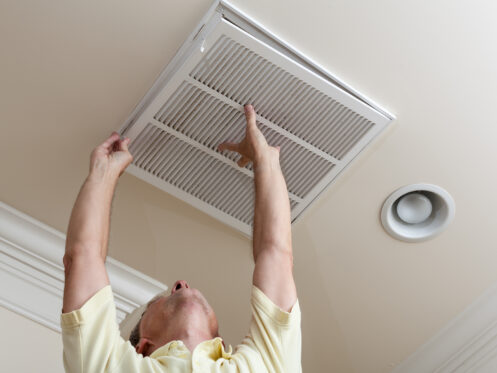
During a hot, sticky Florida summer, seeing droplets of water forming on your ceiling AC vents can be alarming. This “sweating” is a common sight in Cape Coral homes, but it is not something you should ignore. The moisture is condensation, which occurs when warm, humid air comes into contact with the cold metal surface of your supply vent. While a small amount of condensation might seem harmless, its existence often points to a larger underlying issue.
Moisture around your vents can be a symptom of high indoor humidity, ductwork leakage, gaps in your attic insulation, or problems with airflow. Left unaddressed, this persistent dampness can lead to ceiling stains, mold growth, and reduced indoor air quality. Understanding the root cause is the first step toward finding a lasting solution and keeping your home comfortable and dry.
Why Ceiling Vents Sweat During Florida Summers
The science behind sweating vents is straightforward: condensation. Your air conditioner delivers cold air, which significantly chills the metal and plastic components of the supply vent in your ceiling. When the warm, moisture-laden air inside your home or from your attic touches this cold surface, the air rapidly cools and can no longer hold as much moisture. That excess water vapor turns into liquid droplets on the vent, much like how a glass of iced tea sweats on a summer day.
- Cold air from your AC system chills the vent surface
- Warm, humid air makes contact with the cold vent
- Moisture in the air condenses into water droplets
- Florida’s humid climate creates perfect conditions for this
High Indoor Humidity Can Make Vent Sweating Worse
One of the most critical functions of your air conditioner is to remove humidity from the air as it cools your home. If your system is not effectively dehumidifying, the excess moisture in your indoor air can easily lead to condensation on your vents. Several factors can contribute to high indoor humidity in Cape Coral homes.
An oversized AC unit is a common culprit. A system that is too powerful for your home will cool the space very quickly and then shut off. This process, known as short cycling, does not give the system enough run time to pull a significant amount of moisture from the air. The result is a room that feels cool but also damp or clammy.
Additionally, issues like a dirty air filter or a clogged evaporator coil can restrict airflow, reducing your AC’s ability to dehumidify. Even your thermostat setting can play a role. If the fan is set to “ON” instead of “AUTO,” it will run continuously, even when the cooling cycle is off.
This continuous fan operation can reintroduce moisture from the wet evaporator coil back into your home’s air. In cases of persistent high humidity, a whole-home dehumidifier may be the most effective solution.
Duct Leakage Around Ceiling Vents
Your attic is one of the hottest and most humid parts of your home, especially during a Florida summer. If the ductwork running through this space has leaks, it can directly contribute to sweating ceiling vents. The connections where the main duct lines meet the vent registers, known as duct boots, are common places for air leaks to occur.
When there are gaps or poor seals around these connections, two things can happen. First, cold, conditioned air escapes into the attic, wasting energy and money. Second, and more critically for this issue, hot and extremely humid attic air can be pulled into your living space around the vent. This blast of humid air hits the cold vent and immediately condenses, creating significant moisture buildup.
Insulation Gaps and Unsealed Duct Boots
Proper insulation is your home’s defense against intense summer heat. It is especially important in the attic, where it creates a thermal barrier between the hot, unconditioned space and your cool, conditioned living areas. When this barrier is compromised, it can lead to sweating vents.
Duct boots themselves should be properly insulated to prevent their surfaces from becoming excessively cold. If a boot is uninsulated, its metal surface will be much colder than the surrounding ceiling, making it a prime target for condensation. Furthermore, any gaps in the insulation around the ceiling cutout for the vent create a direct path for humid attic air to seep into your home. This infiltration increases the temperature difference and moisture levels right at the vent, making condensation almost inevitable.
When Sweating Vents Point to an HVAC Problem
While some minor condensation can be attributed to a particularly humid day, persistent or heavy sweating often signals a more significant HVAC issue that requires professional attention. Paying attention to other warning signs can help you determine if it is time to call for a diagnosis.
- Ice or frost forming on vents
- Musty or mildewy odors
- Water stains or peeling paint
- Consistently humid or sticky rooms
- AC runs constantly or short cycles
- Weak or insufficient airflow
How Professionals Diagnose Sweating Ceiling Vents
When you call our NATE-certified team, we know that the sweating vent is just a symptom. A thorough diagnosis involves looking at the entire system to find the true cause. Our technicians perform a comprehensive inspection to pinpoint why you are experiencing excess moisture.
- Indoor humidity readings
- Detailed ductwork inspection for leaks
- System airflow testing
- Air filter and evaporator coil inspection
- Attic insulation and sealing assessment
- AC size and performance evaluation
Solutions for Sweating Ceiling Vents
The right solution for sweating vents depends entirely on the underlying cause. A one-size-fits-all approach rarely works. Based on a professional diagnosis, we can recommend the most effective fix for your home.
Common solutions include sealing duct leaks to prevent hot attic air from entering your home and properly insulating duct boots and the surrounding attic area. In many cases, improving airflow through routine AC maintenance and cleaning can resolve the problem. Sometimes, a simple adjustment to your thermostat’s fan settings is all that is needed.
If high indoor humidity is the primary issue, we can explore options to address it directly. This may involve servicing your AC unit to improve its dehumidification performance or installing an indoor air quality product like a whole-home dehumidifier. If an improperly sized system is causing short cycling, our team can evaluate your home’s cooling load and discuss appropriate replacement options.
Stop Sweating Ceiling Vents With Ultimate Homes Cooling and Electrical
Sweating ceiling vents in Cape Coral homes are more than just a minor annoyance; they are a sign that something is out of balance with your home’s cooling and moisture management systems. The cause is often a combination of Florida’s high humidity and issues like duct leaks, insulation gaps, airflow restrictions, or poor AC performance. Ignoring the problem can damage your home and compromise air quality.
The expert team at Ultimate Homes Cooling and Electrical has been serving homeowners since 1999. We have the tools and experience to accurately diagnose the reason for your sweating vents and provide a reliable, long-term solution. Do not let excess moisture compromise your comfort. Contact us today for professional AC and ductwork services in Cape Coral, FL.
Frequently Asked Questions
While it is very common for ceiling vents to sweat in Florida due to the high humidity, it is not “normal” in the sense that it should be ignored. It indicates an imbalance between the cold vent surface and the warm, moist air around it, which can point to underlying issues with your HVAC system, ductwork, or insulation.
Yes, absolutely. Leaks in the ductwork, particularly around the duct boot that connects to the vent, are a primary cause of condensation. These leaks can pull hot, extremely humid air from your attic directly toward the cold vent, creating the perfect conditions for water droplets to form.
Stopping AC vents from sweating requires identifying and fixing the root cause. Solutions can include sealing air leaks in your ductwork, adding insulation around the duct boots in the attic, improving your system’s airflow through maintenance, adjusting thermostat fan settings, or addressing high indoor humidity with a dehumidifier. A professional HVAC inspection is the best way to determine the correct solution for your home.
